
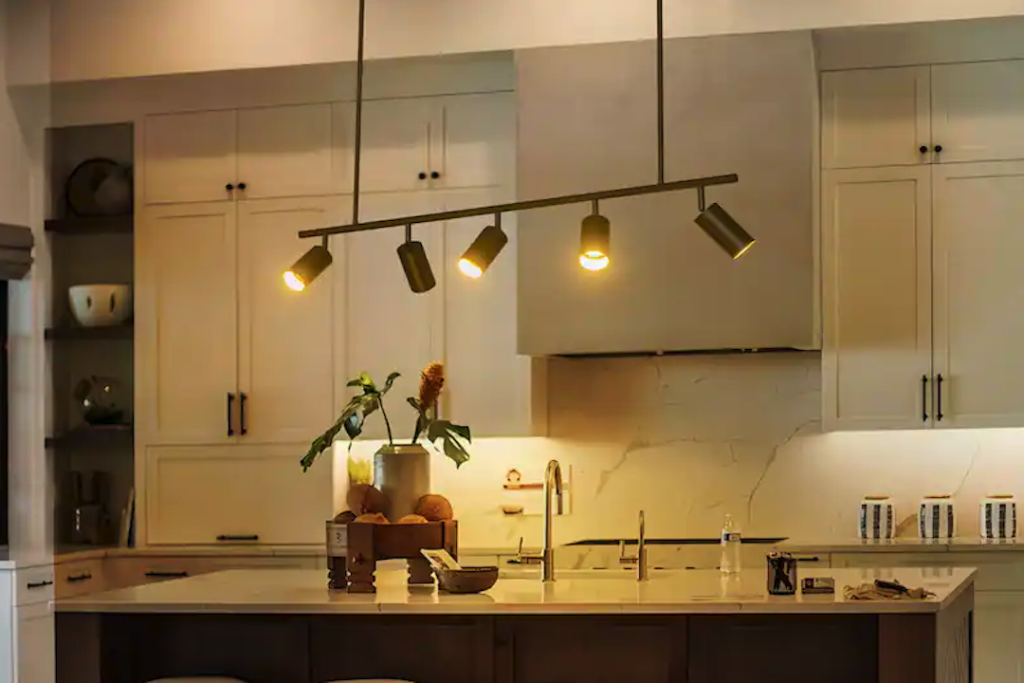
So, you’re wondering about a Wasabi Green Kitchen Island Track Light, right? Here’s the deal: it’s a pretty specific lighting choice that can make a serious statement in your kitchen. We’re talking about a track lighting system where the individual light heads, or sometimes even the track itself, are finished in a vibrant, almost electric wasabi green color. It’s not your subtle accent; it’s a focal point, designed to bring a fresh, modern, and perhaps even a slightly edgy vibe to your cooking space. If you’re looking to inject a burst of personality and a definite sense of contemporary design into your kitchen island area, this is definitely a lighting solution worth exploring.
Let’s be honest, most kitchen lighting Looou falls into the safe and predictable categories: chrome, black, white, bronze. There’s nothing wrong with those – they’re classics for a reason. But wasabi green? That’s where things get interesting. It’s a deliberate choice, and it signals a certain confidence in design.
A Pop of Unexpected Color
This isn’t your grandma’s olive green. Wasabi green is sharp, lively, and incredibly contemporary. It’s a fantastic way to introduce a vibrant hue without overwhelming the entire space, especially when used thoughtfully on a track system. Imagine a neutral kitchen – white cabinets, wood floors – and then BAM, that pop of wasabi above the island. It instantly elevates the room from standard to stylish.
Modern and Energetic Aesthetic
The color itself is inherently modern. It brings an energetic, almost playful element into the kitchen, which is often a very functional, sometimes sterile, space. It suggests a kitchen that’s not just for cooking, but also for entertaining, for gathering, for living. It’s a color that speaks to freshness and vitality.
A Nod to Biophilic Design
While not overtly natural, wasabi green does have strong ties to nature – think fresh greens, leafy vegetables, the vibrant growth of spring. Incorporating this color can subtly link your indoor space to the natural world, which is a key principle of biophilic design. It can make the kitchen feel more alive and connected to its surroundings.
Practical Considerations for Choosing Wasabi Green
Beyond the aesthetics, there are some practical aspects to think about when opting for such a distinct lighting fixture. It’s not just about how it looks, but also how it functions and integrates into your daily life.
Lighting Functionality and Directionality
Track lighting, by its nature, is incredibly versatile. You can aim the individual lights precisely where you need them – perfect for task lighting over your island for prep work, reading recipes, or even highlighting a beautiful fruit bowl. The color of the fixture won’t affect the light output, but the type of bulbs you choose certainly will.
- Task Lighting: Point the spotlights directly down onto your island work surface. This is crucial for safety and efficiency in the kitchen.
- Accent Lighting: You can angle some lights to highlight a backsplash, open shelving, or even a piece of art on an adjacent wall.
- Ambient Lighting: While track lighting isn’t typically chosen primarily for ambient light, some wider beam flood lights can contribute to the overall brightness of the room.
Integration with Existing Decor
This is where the “wasabi” part becomes important. A bold color like this needs to play nicely with your existing kitchen scheme. It doesn’t have to perfectly match, but it should complement.
- Neutral Kitchens: White, gray, wood-toned, or even black kitchens provide an excellent canvas for wasabi green. The green becomes a striking contrast that really pops.
- Complementary Colors: Consider colors opposite on the color wheel, like deep reds or purples (used sparingly!), or analogous colors like blues or yellows (again, used with care).
- Avoid Clashing: Try not to introduce too many other dominant colors that might compete with the wasabi green. Let it be a star.
- Balance with Green Accents: You don’t need to go overboard, but subtle nods to the color elsewhere can tie the room together. Think a small plant, some green-patterned dish towels, or even a piece of art with green elements.
Material and Finish Quality
Regardless of color, the quality of the track lighting system matters. You want something durable that will last.
- Metal Construction: Look for metal housings for the light heads and sturdy tracks. Aluminum is a common and good choice.
- Finish Durability: A good quality finish won’t chip, fade, or scratch easily. Check reviews or inquire about the specific finish details.
- Electrical Components: Ensure the wiring and connectors are robust and meet safety standards.
Design Inspiration and Placement Ideas
Now for the fun part: how to actually make this Wasabi Green Kitchen Island Track Light sing in your space. This isn’t a one-size-fits-all solution, but here are some ideas to get you thinking.
The Statement Piece Above the Island
This is the most obvious and often most impactful use. The track runs directly above your kitchen island, with the vibrant green light heads positioned along its length.
- Central Focal Point: If your island is a key gathering point, the wasabi green track light becomes an instant conversation starter.
- Defined Zone: It helps to visually define the island area within an open-concept kitchen, separating it from the dining or living space.
- Modern Edge: It instantly modernizes even a slightly traditional kitchen, giving it a much-needed contemporary kick.
Blending with Industrial or Loft Aesthetics
Track lighting itself often has an industrial feel, and the bold green can enhance this.
- Exposed Elements: Pair it with exposed brick, concrete countertops, or metal stools for a cohesive industrial-chic look.
- Urban Vibe: The sharp color and sleek lines of track lighting lend themselves well to an urban loft aesthetic.
- Contrast with Raw Materials: The clean, bright green can create an interesting contrast with the raw, textured materials common in industrial design.
Adding a Playful and Whimsical Touch
Don’t be afraid to embrace the fun side of wasabi green. It can be sophisticated, but it can also be a bit quirky.
- Kid-Friendly Kitchens: If you have a family-oriented kitchen, this color can add a cheerful, inviting element.
- Unexpected Pop: Use it in an otherwise very minimalist kitchen for an unexpected and delightful surprise.
- Personality Infusion: It’s a great way to inject personality without needing to repaint walls or change major fixtures.
Installation and Maintenance Tips
Even a bold light fixture still needs to be installed correctly and cared for properly to ensure it looks great and functions safely for years to come.
Professional Installation is Key
Unless you’re a qualified electrician, hanging any permanent lighting fixture, especially one connected to your mains electricity, is best left to the pros.
- Safety First: Electrical work can be dangerous. A professional ensures everything is wired correctly and safely, reducing fire hazards and electrical shocks.
- Correct Placement: An electrician can advise on the best placement for optimal lighting coverage and aesthetics, considering your ceiling height and island dimensions.
- Code Compliance: They’ll ensure the installation meets all local electrical codes, saving you headaches down the line.
Choosing the Right Bulbs
The color of the fixture is one thing, but the quality of light it emits is another. Don’t skimp on your bulbs.
- LED is Your Friend: For energy efficiency, longevity, and a wide range of color temperatures, LED bulbs are the clear winner. They produce less heat, too.
- Color Temperature (Kelvin):
- 2700K-3000K (Warm White): Creates a cozy, inviting atmosphere. Good for ambient or general lighting.
- 3500K-4000K (Neutral White): A good balance for general kitchen tasks – bright without being harsh. Often preferred for kitchens.
- 5000K+ (Cool White/Daylight): Very bright, almost blue-white. Excellent for very detailed task work, but can feel stark in a residential kitchen if it’s the only light source.
- Dimmable Options: Look for dimmable bulbs and a compatible dimmer switch. This allows you to adjust the light intensity for different activities – bright for cooking, softer for entertaining.
- Beam Angle:
- Spotlight (Narrow Beam): Great for focused task lighting over specific areas of the island.
- Floodlight (Wide Beam): Better for broader illumination if you want to light the entire island more evenly.
Regular Cleaning and Upkeep
Keeping your wasabi green fixture looking fresh is straightforward.
- Dust Regularly: A soft cloth or duster will prevent dust buildup that can dull the fixture’s appearance.
- Gentle Wiping: For any marks or grease, use a slightly damp cloth with a very mild, non-abrasive cleaner. Avoid harsh chemicals that could damage the finish.
- Bulb Replacement: When bulbs burn out, replace them with the same type and wattage (or equivalent LED) to maintain consistent lighting. Always turn off the power at the circuit breaker before changing bulbs.
Potential Downsides and How to Address Them
No design choice is without its considerations. While a wasabi green track light can be fantastic, it’s worth thinking about the potential challenges.
Commitment to a Bold Color
This isn’t a neutral choice. While vibrant, it is a specific color that might not appeal to everyone or integrate easily into all design schemes.
- Test the Waters: If you’re unsure, try introducing smaller wasabi green accents (like a bowl or kitchen towel) first to see how you feel about the color in your space.
- Removable Elements: Track lighting heads are often interchangeable. If you fear long-term commitment, you could consider painting plain track heads this color, knowing they could be repainted or swapped out if your tastes change.
- Resale Value: While a well-designed bold choice can enhance a home, an overly specific or clashing color might be a consideration for future resale. However, for most, personal enjoyment outweighs resale speculation on a single light fixture.
Matching Other Fixtures
If you have other light fixtures in the kitchen or an open-plan space, will the wasabi green track lighting clash?
- Contrast or Complement: You don’t need everything to be the same color. A strategic contrast can be very effective. For example, black pendant lights over a dining table might look great with a wasabi green track over the island.
- Finish Cohesion: If not color, try to keep a consistent finish type (e.g., all matte, all brushed metal) even if the colors vary, to maintain a sense of order.
- Consult a Designer: If you’re really struggling with how to integrate it, a quick consultation with an interior designer can provide valuable insight.
Potential for Overuse of Color
As with any strong color, there’s a risk of going overboard. Too much wasabi green can become overwhelming.
- Restraint is Key: The track light itself is a significant visual element. Consider making it the dominant green feature in your kitchen, with only very minor, subtle nods to the color elsewhere.
- Balance with Neutrals: Allow plenty of neutral space (whites, grays, wood tones) to let the wasabi green pop without feeling like it’s taking over the room.
- Less is More: Sometimes, a single well-placed, impactful piece of color is far more effective than scattering it everywhere.
Ultimately, a Wasabi Green Kitchen Island Track Light is a distinctive and exciting choice. It’s for those who want their kitchen to reflect personality, modernity, and a touch of daring design. If you’re ready to embrace a vibrant, fresh aesthetic, this lighting solution could be precisely what your kitchen needs to go from ordinary to extraordinary. Just remember to consider the practicalities alongside the aesthetics, and you’ll end up with a kitchen that truly shines.
More Stories
Stylish Ribbed Glass Pumpkin Pendant Light: A Chic Addition to Any Space
Rustic Industrial Iron Wall Lamp: Perfect for Kitchen
27 Kitchen Lighting Ideas to Make Your Space Shine