
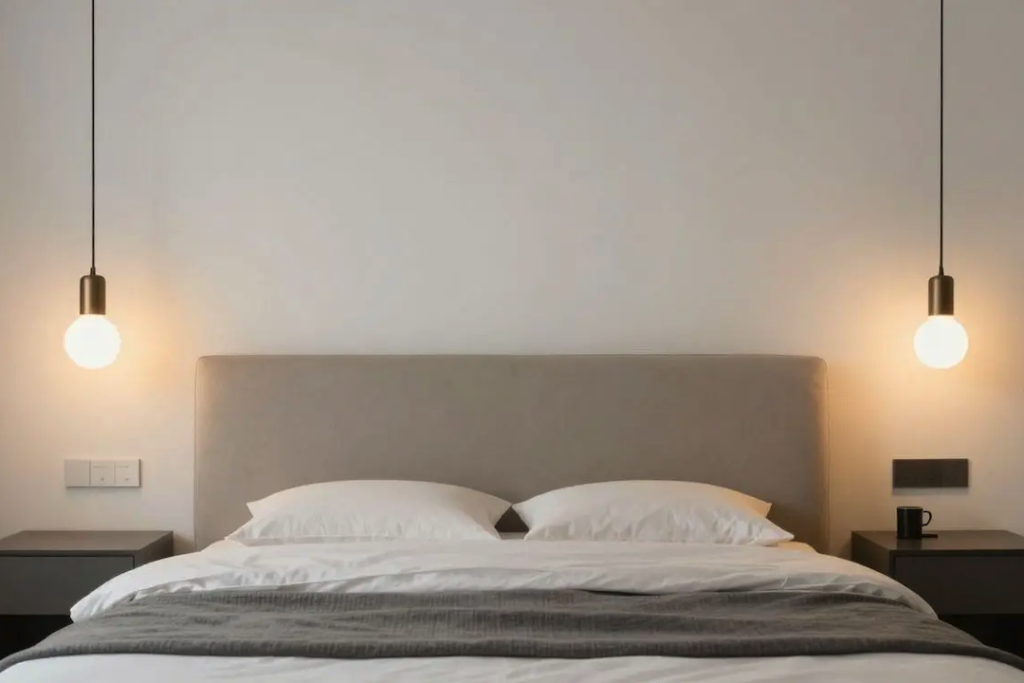
So, you’re looking to jazz up your small bedroom with a hanging bedside glass pendant light? Smart move! It’s a fantastic way to add a touch of style, save precious surface space, and create a cozy atmosphere. Think of it as a mini design statement that punches above its weight. This guide will walk you through everything you need to know to make it happen, from choosing the right light to getting it installed.
Let’s get down to brass tacks. Why is this specific type of light Omelighting a good fit for a snug sleep space? It’s all about maximizing what you have.
Embracing the Vertical Space
Small bedrooms often feel cramped because every inch of floor and surface space is valuable. A hanging pendant light, by its very nature, draws the eye upwards and utilizes the vertical space above your bedside table.
Freeing Up Your Nightstand
This is arguably the biggest win for a small bedroom. Imagine a clear nightstand, ready for your book, a glass of water, or just some breathing room. No more fiddling with lamps that hog half the surface.
Creating a Focal Point
A well-chosen pendant light can become a beautiful focal point in your room, adding visual interest without taking up any floor area. It’s like a piece of jewelry for your bedroom.
The Charm of Glass
Glass pendants aren’t just functional; they bring a certain je ne sais quoi. Depending on the style, they can feel airy and light, or provide a warm, diffused glow.
Light Diffusion and Ambiance
The material of the shade plays a big role. Glass can diffuse light beautifully, creating a softer, more inviting mood than a harsh direct bulb.
Aesthetic Versatility
From sleek modern designs to vintage-inspired globes, glass pendants come in a surprising range of styles. This means you can easily find one that complements your existing décor.
Choosing Your Perfect Glass Pendant
This is where the fun (and maybe a tiny bit of decision paralysis) begins. With so many options, how do you pick the one that’s just right?
Size Matters (Even in Small Spaces)
Don’t go for something that overwhelms your bedside area. Proportion is key.
Diameter of the Shade
For most small bedrooms, a pendant shade with a diameter between 5 and 10 inches is usually a safe bet. Anything larger might feel like it’s looming over you.
The Drop Length
Consider how far down the light will hang. You want it to be at a comfortable reading height without being in your face when you’re sitting up in bed. Generally, the bottom of the shade should be about 12-18 inches above the top of your nightstand.
Style: Modern, Vintage, or Somewhere In Between?
Your pendant light should sing in harmony with the rest of your room’s aesthetic.
Modern and Minimalist
Think clean lines, geometric shapes, clear glass, or frosted finishes. These often have a sleek, understated feel.
Bohemian and Eclectic
Consider colored glass, textured finishes, or more organic shapes. These can add a splash of personality.
Mid-Century Modern
Often features brass or other metallic accents, with simple, often spherical or teardrop-shaped glass shades.
Vintage and Industrial
Look for distressed finishes, exposed bulbs within clear glass cages, or amber-toned glass for a warmer glow.
The Type of Glass
The glass itself can dramatically alter the light’s appearance and the quality of light it casts.
Clear Glass
Offers an unobstructed view of the bulb, making bulb choice important. Lets light shine through fairly directly.
Frosted or Opal Glass
Diffuses light, creating a softer, more even glow. Excellent for reducing glare.
Amber or Tinted Glass
Adds warmth and can create a cozier, more intimate atmosphere. Might reduce overall brightness.
Seeded or Textured Glass
Adds visual interest and can create beautiful light patterns on your walls.
Bulb Considerations
The bulb you choose will impact the light’s brightness and color temperature.
LED vs. Halogen
LEDs are energy-efficient and have a long lifespan, making them a practical choice. Halogen bulbs offer excellent color rendering but consume more power.
Wattage and Brightness
For bedside lighting, you don’t need an interrogation lamp! Aim for a bulb that provides enough light for reading without being too harsh. A 40-60 watt equivalent LED is usually sufficient.
Color Temperature (Kelvin)
- Warm White (2700K-3000K): Ideal for creating a cozy, relaxing atmosphere, perfect for bedrooms.
- Cool White (3500K-4100K): More neutral, can be good for task lighting but might feel less relaxing.
Installation: DIY vs. Professional (And What You Need to Know)
This is the part where you get your hands dirty, or decide to call in the cavalry.
Assessing Your DIY Skills
Be honest with yourself. Do you’re comfortable working with basic electrical wiring? Have you ever wired a light fixture before?
Understanding Basic Wiring
- Identifying Wires: You’ll typically encounter black (hot), white (neutral), and green or bare copper (ground) wires.
- Making Connections: Using wire nuts to securely connect matching wires.
- Safety First: Always turn off power to the circuit at the breaker box before starting any electrical work.
What You’ll Need for a DIY Installation
Having the right tools makes the job much smoother.
Essential Tools
- Screwdriver Set: For removing canopies and mounting brackets.
- Wire Strippers/Cutters: To prepare the wires for connection.
- Wire Nuts: To secure electrical connections.
- Voltage Tester: Crucial for ensuring the power is off.
- Ladder or Step Stool: To safely reach the installation area.
- Safety Glasses: Protect your eyes.
The Professional Route: When to Call an Electrician
If any of the following apply, it’s definitely time to call in the pros.
Complex Existing Wiring
If your ceiling has an old, complicated wiring system, or if you’re unsure about the existing setup.
No Existing Ceiling Fixture
If there’s no existing light fixture or junction box, you’ll need an electrician to run new wiring and install these.
You’re Not Confident
Your safety and peace of mind are worth a lot. If you’re not 100% confident, hire an electrician. They’ll do it quickly and correctly.
Wiring Up Your Pendant: The Practical Steps
If you’re going the DIY route, here’s a breakdown of the general process. Remember to always refer to the manufacturer’s specific instructions for your pendant light.
Step 1: Preparation and Safety
This is non-negotiable.
Disconnect Power
Go to your home’s breaker box and locate the circuit that controls the light fixture in your bedroom. Flip the breaker to the “off” position. Double-check with a voltage tester at the existing fixture to ensure the power is indeed off.
Remove the Old Fixture (If Applicable)
Carefully unscrew the old light fixture from the ceiling. You’ll likely see a mounting bracket attached to the junction box. Disconnect the wires by unscrewing the wire nuts.
Step 2: Installing the Mounting Bracket
This secures your new pendant.
Attach the Bracket
Most pendant lights come with a mounting bracket. Attach this bracket securely to the existing junction box in your ceiling using the screws provided. Ensure it’s firmly in place.
Step 3: Wiring the Pendant
This is where you connect the light to your home’s electricity.
Connecting the Wires
- Identify Pendant Wires: Your pendant will have wires (usually black, white, and sometimes a ground wire).
- Connect Ground First: Connect the ground wire from the pendant (usually green or bare copper) to the ground wire from the ceiling (either green or bare copper) using a wire nut.
- Connect Neutral: Connect the white wire from the pendant to the white wire from the ceiling using a wire nut.
- Connect Hot: Connect the black wire from the pendant to the black wire from the ceiling using a wire nut.
- Tuck Wires: Gently tuck all the connected wires back into the junction box.
Step 4: Attaching the Pendant and Canopy
The final assembly.
Secure the Shade and Canopy
Follow your pendant’s instructions to attach the glass shade to the fixture. Then, carefully feed the pendant’s cord through the canopy (the decorative cover that mounts to the ceiling).
Mount the Canopy
Slide the canopy up to the ceiling, covering the junction box and mounting bracket. Secure it in place according to the manufacturer’s instructions, usually with screws.
Step 5: Testing
The moment of truth!
Restore Power
Go back to your breaker box and turn the circuit back on.
Test the Light
Flip your wall switch to see if your new pendant light shines. If it doesn’t, immediately turn off the power at the breaker and re-check your wiring connections.
Maximizing Your Small Bedroom with Other Smart Touches
A pendant light is a fantastic start, but let’s think about how it fits into the broader picture of your small bedroom.
Complementary Lighting
Don’t rely solely on your pendant. Think about layering light for different moods.
Task Lighting for Reading
Your pendant will likely serve this purpose, but ensure it’s positioned correctly for comfortable reading.
Ambient Lighting for Relaxation
Consider a dimmable wall sconce or a small floor lamp in a corner to soften the overall light when you’re not reading.
Furniture Placement and Scale
The pendant light needs a supportive environment.
Nightstand Choice
Choose a nightstand that’s appropriately sized. A floating shelf can be an excellent alternative to a bulky nightstand, further enhancing the minimalist feel.
Bed Frame
Opt for a low-profile bed frame or one with built-in storage to keep the room feeling open.
Storage Solutions
Even with a pendant, clutter can make a small room feel tighter.
Vertical Storage
Utilize wall-mounted shelves or tall, narrow bookcases.
Under-Bed Storage
Drawers or bins can be lifesavers.
Color Palette and Mirrors
These elements can visually expand your space.
Light and Airy Colors
Whites, pastels, and light neutrals can make a room feel larger and brighter.
Strategic Mirror Placement
A well-placed mirror can reflect light and create the illusion of more space.
By thoughtfully incorporating a hanging glass pendant light and considering these other design elements, you can transform your small bedroom into a stylish, functional, and comfortable sanctuary. It’s about making smart choices that work for your specific space.


More Stories
Creating a Vibey Apartment Aesthetic with Wavy Neon LED Strip Lights
Organic Modern Jade Green Clay Bedside Lamp
Creating a Cozy Passage with Warm Glow Corridor Ceiling Lighting